
Granville Parole and Probation Differences
Each label answers a different legal question. Probation is a sentence served in the community under a court order. Post-release supervision begins after release from prison for covered North Carolina sentences. Parole is a conditional prison release system that remains relevant mainly to legacy sentences and special categories. None of these labels should be inferred merely because a person is no longer in the Granville County Detention Center. A transfer to NCDAC is still custody, and departure from an NCDAC prison may begin a new period of state supervision.
| Status | How it begins | Primary authority | What to verify |
|---|---|---|---|
| Probation | A court orders a community sentence | NCDAC Community Supervision and the court | Judgment, status, dates, and assigned office |
| Post-release supervision | A covered state prison term reaches release | Post-Release Supervision and Parole Commission with NCDAC field supervision | Prison event, supervision event, conditions, and discharge |
| Parole | The Commission grants conditional release for an eligible sentence | North Carolina Post-Release Supervision and Parole Commission | Exact decision, effective date, status, and conditions |
The court judgment helps explain probation. The NCDAC event history explains state prison release and later supervision. Reading both prevents a prison movement, a local jail release, and a supervision start from being treated as the same event.
Probation can begin without any prison release. A judge may impose it as the sentence, while post-release supervision depends on a covered prison sentence and follows the prison event. Parole requires separate legal eligibility and Commission action. The exact judgment and NCDAC history matter more than a casual use of the word parole. They show which authority acted, when supervision began, and whether another custody or supervision term overlaps it.
- Supervisee
- A person managed in the community by a correctional agency.
- Discharge
- The formal end of a custody or supervision term, as shown by the responsible authority.
- Absconder
- A status alleging that a person failed to remain available or meet reporting duties.
- Revocation
- An official action that can end community placement and return a person to custody.
Verify Granville Post-Release Supervision
The strongest starting point is the NCDAC Offender Public Information Search. Search by offender number when it is known. A number is more reliable than a name because spelling variants and shared names can produce the wrong record. Compare birth information, conviction county, offense, sentence, status, incarceration events, location, and community-supervision events before drawing a conclusion.
- Open the NCDAC search and select the search path that fits the available information.
- Enter the offender number. If it is unknown, search the full name and use the available identifying filters.
- Open the likely result and compare identity fields, offense, conviction county, and sentence details.
- Read incarceration and community-supervision events together. Look for an explicit probation, parole, post-release supervision, or discharge event.
- Record the offender number, exact status label, event date, and office information shown.
- Contact NCDAC Community Supervision or the Commission when the live status, assigned office, or meaning of an event needs confirmation.
The Granville County released-inmate search routes can help identify the last custodian before the NCDAC check. An empty facility field or a missing name is not an affirmative supervision record. Older data, protected information, inactive sentences, and corrections may also affect what appears.
The official NCDAC supervision search is shown below.
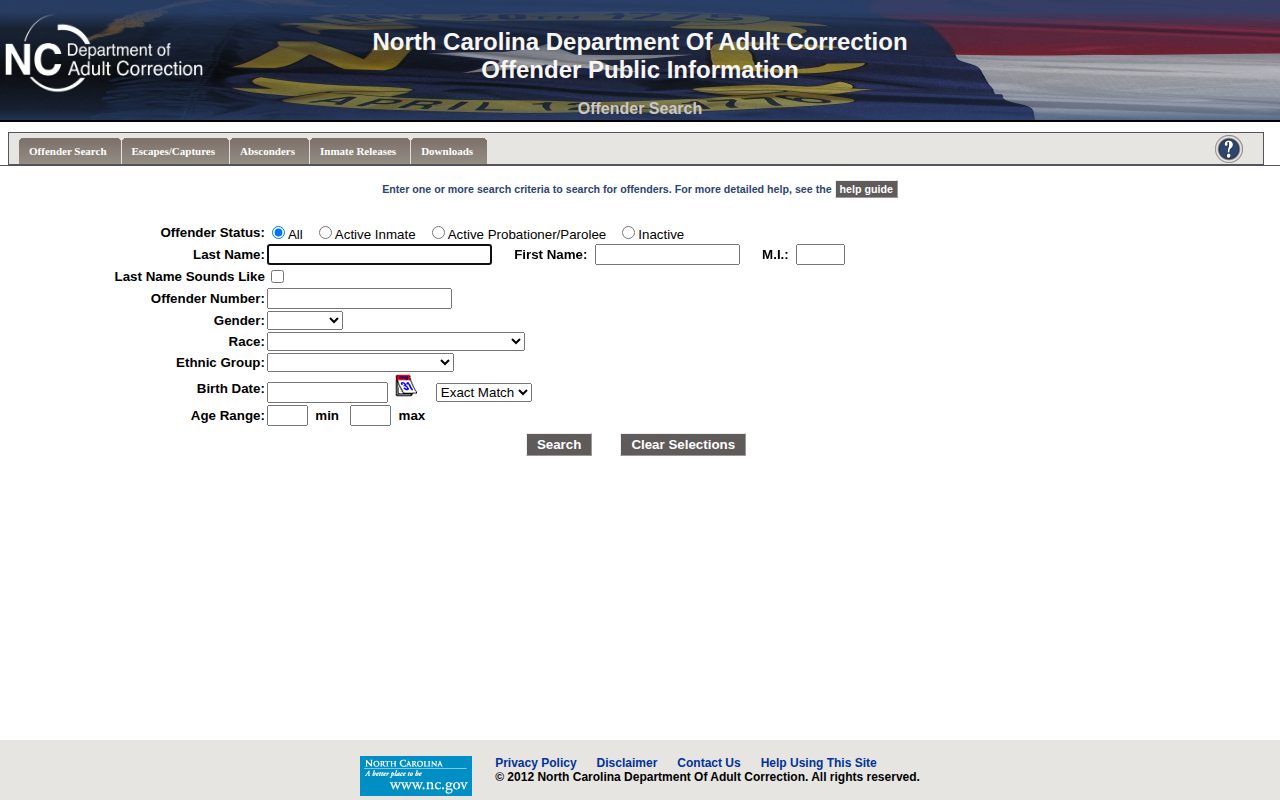
The form establishes the state source and search fields. The matching record, not the landing page by itself, supplies the supervision event that must be interpreted.
Granville Release Is Not Discharge
A Granville County custody path can cross several agencies. Someone may leave the county detention center because NCDAC accepts a prison commitment. That is a transfer, not release to the community. The same person may later leave Granville Correctional Institution or another state prison and begin post-release supervision. Only a later discharge event may show the end of state control.
Local jail custody → NCDAC prison custody → community supervision → discharge
Important: “Not in the county jail” does not prove community release, and “released from prison” does not prove that state supervision has ended.
Follow the identifier belonging to each system. The county jail uses a booking record. NCDAC uses an offender number. A court case number explains the judgment. When the records conflict, the state event and the assigned supervision office are the proper sources for present parole, probation, or post-release status.
Granville Absconder and Violation Status
An absconder label means the supervising agency alleges that the person did not stay available or comply with a reporting duty. It is not proof of a new conviction. A violation allegation also does not establish that revocation occurred. The response may depend on the violation, the governing order, agency action, and a court or Commission decision.
Granville County did not publish a verified county-specific absconder list in the official materials reviewed. Use the NCDAC person record and direct state confirmation. If a warrant is shown or confirmed, it can create a return-to-custody risk, but the exact warrant and disposition should be taken from the issuing authority. Do not convert a stale supervision notation into a claim that a person is currently wanted.
NC SAVAN and VINELink can relay certain custody changes from participating sources, but those alerts are not a substitute for the supervision record. Notifications can lag, and the service does not decide whether an alleged breach occurred.
Granville Parole Review Records
Modern North Carolina structured-sentencing cases generally use statutory post-release supervision rather than a traditional public parole hearing. Parole still matters for eligible older and special-category sentences. There is no verified statewide public database of individual decisions or recurring public calendar that can be promised for every Granville County case.
Start with the judgment date, offense date, sentence structure, and NCDAC record. Then ask the Commission for a case-specific public schedule or decision when appropriate. Possible record labels can include granted, denied, deferred, continued, conditions imposed, rescinded, or reconsidered, but only the exact label in the actual record should be repeated. Eligibility cannot be calculated from the offense name alone.
The official discretionary parole review page publishes monthly review information where available.
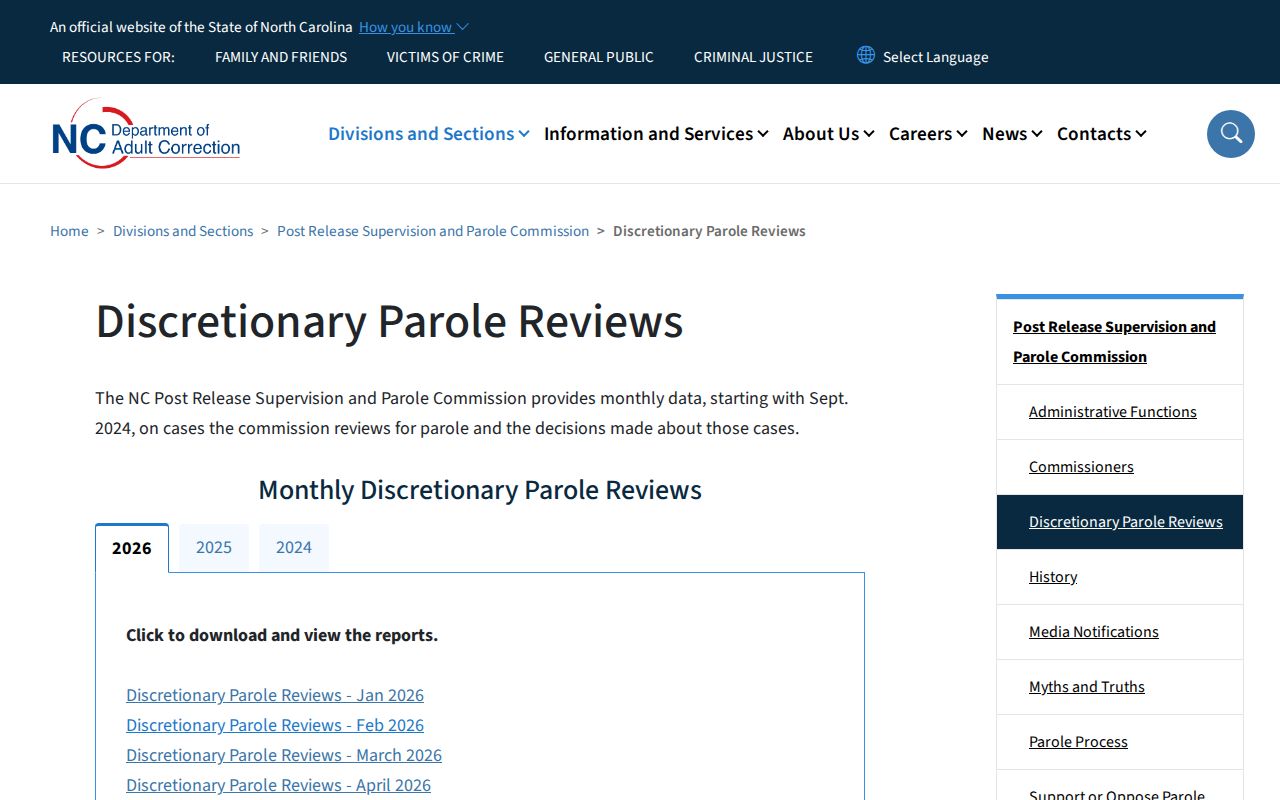
This source helps locate Commission review material without suggesting that every sentenced person has a scheduled public hearing.
Confirm Granville Supervision Discharge
Supervision ends through an official discharge, expiration, termination, or other agency or court action that applies to the specific case. A projected end date is not the same as a completed discharge. Credits, amended orders, violations, warrants, and revocation action may affect the path, while separate cases can create overlapping supervision.
Look for an explicit discharge or termination event in the NCDAC history and compare its date with the sentence and supervision entries. If the record remains unclear, provide the offender number to Community Supervision or the Commission. A public-record request should seek an existing decision or event record rather than ask the agency to create a new legal analysis. Under North Carolina Chapter 132, lawful exceptions and redactions may apply, but a separable public portion should not be withheld merely because confidential material appears with it.
Keep the final result narrow: the exact status, the responsible authority, and the date verified. That approach preserves the difference between release from a building and discharge from state supervision.
A written confirmation is useful when the public record contains more than one sentence or supervision period. Ask which event is active, which has ended, and which office controls the present record. Do not merge expired probation with a later post-release term. Preserve the inquiry date because the status can change after a violation decision, office transfer, or discharge. Current operational questions belong to the assigned state office, while the court remains the source for the judgment.